

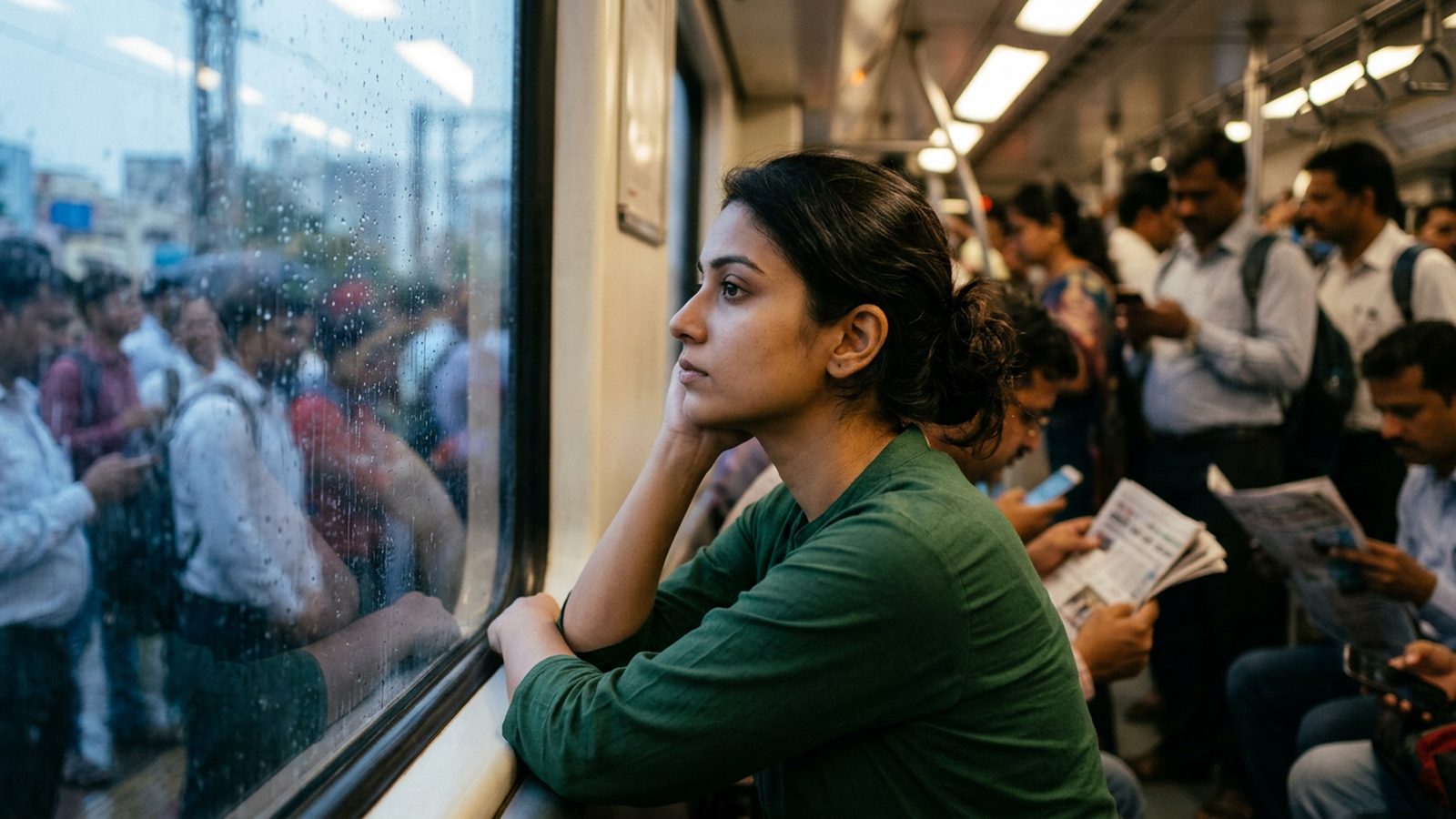
What this kind of loneliness actually is
This is loneliness that has nothing to do with how many people are in the room. A packed office floor, a joint family dinner, a wedding with four hundred guests, all of these can leave you feeling alone if every exchange stays at the level of "how's work" and "have you eaten." Your body is among people. The person inside isn't.
This is also different from being physically alone. Plenty of people who live by themselves don't feel lonely, because one or two people elsewhere know them well. And plenty of people standing in a crowded room, a full house, or an open-plan office feel lonely every single day, because proximity isn't the same as being known.
Why it shows up most at work, at home and in crowds
Offices run on small talk by design. You ask how someone's weekend was, they ask about yours, the standup moves on. Nobody's being fake, that's just the default setting of most shared spaces. The problem is that if every conversation at your desk looks like this, you can go weeks without saying anything real to the people sitting two feet away from you.
Family functions and crowds do the same thing in a different outfit. You're physically packed in among relatives or strangers, everyone is talking, and you still leave feeling like nobody actually asked how you are. That mismatch between a full room and no real exchange is what makes this kind of loneliness confusing. It doesn't look like loneliness from the outside, which is part of why it's easy to dismiss in your own head too. The World Health Organization's 2025 report on social connection found that between 17% and 21% of people aged 13 to 29 report feeling lonely, which means this exact experience in a room full of people your own age is far more common than it feels when you're the one standing in it.
If you've also noticed that people keep missing what you're actually trying to say even when you do talk, that's a related problem worth reading separately: why do people never understand what I'm really saying covers the communication side of this gap.
What to do when you feel alone in a crowd
- Name it to yourself first. Just noticing "I'm around people but I feel alone" without judging yourself for it is the first step. It stops you from assuming something is wrong with you.
- Pick one person in the room and go one level deeper. Instead of trying to fix this with everyone at the party or in the office, choose one colleague, cousin, or neighbour you already trust a little, and share one real thing instead of the usual update.
- Ask a real question back. When someone asks how you are, answer honestly in one sentence, then ask them the same question properly. Most people respond to honesty with honesty, even at a work desk.
- Step out of the main room for a minute. A short walk around the office floor, a balcony break at a family function, a call instead of standing in the crowd. Smaller settings make real conversation easier than the main room does.
- Don't wait to be picked. If you keep waiting for someone else in the crowd to start a real conversation, it may never happen. Most deeper exchanges start because one person in the room decided to go first.
When to talk to someone
If this feeling comes and goes depending on which room you're in, a friend or family member you trust is a good place to start, even just to say "I feel a bit disconnected lately." If it's been constant for weeks regardless of how many people are around you, or if you can't point to a single person at work, at home, or anywhere else you feel safe being honest with, it's worth talking to a counsellor. That's not a sign of failure, it's the same as seeing a doctor for a problem that hasn't gone away on its own.
If it's 11pm after a day spent entirely around people and you still have nobody to say "today was hard" to, the Clarity app has real listeners available right now over chat, call, or video, people who weren't in the room with you, have no stake in how you performed there, and are free to just hear how the day actually went. For loneliness that's sat with you for weeks no matter how full your days look, a Clarity counsellor can help you work out what's actually missing. You can also read more on the loneliness topic hub.