

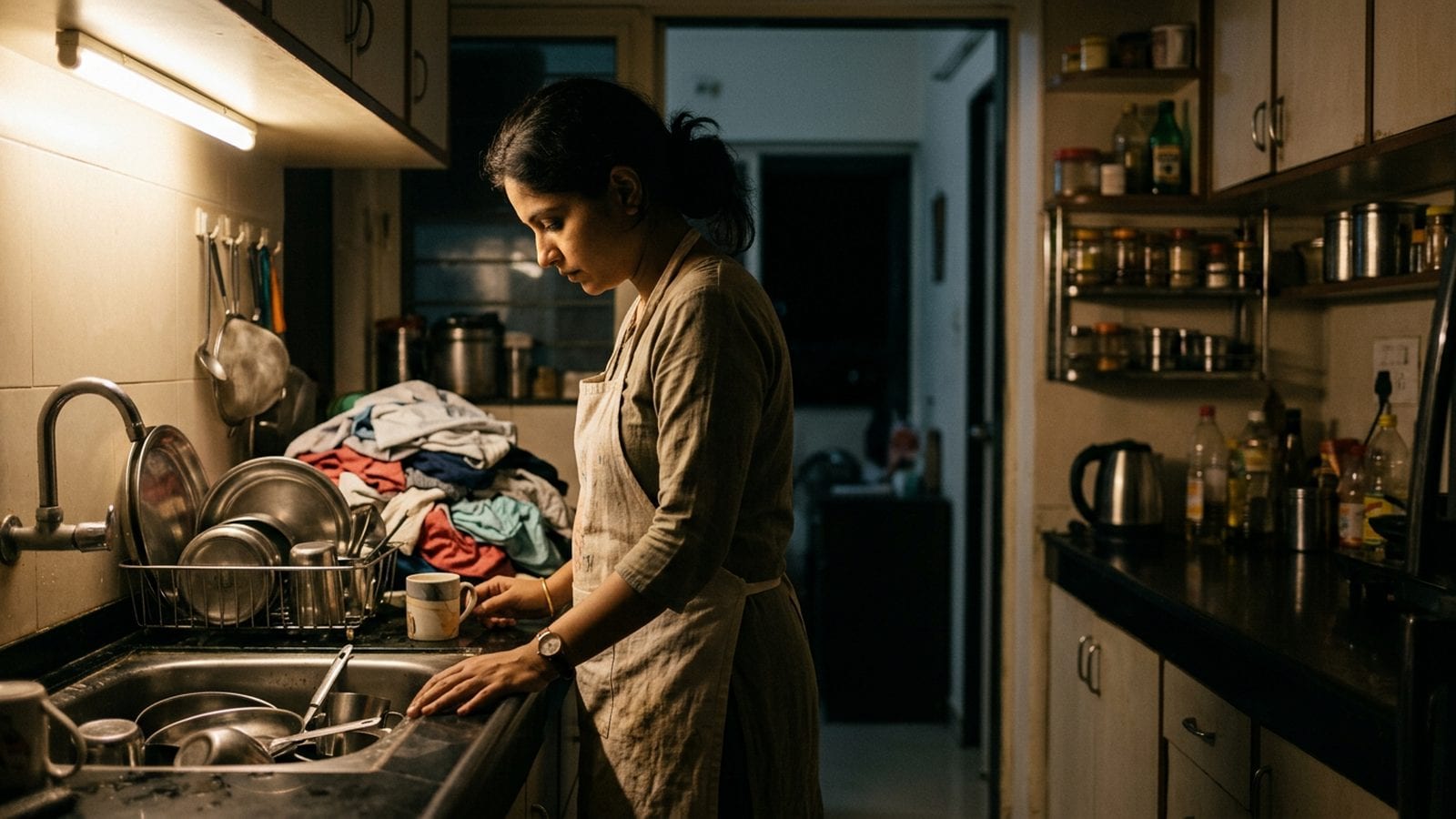
This is a labour problem, not just a love problem
It is possible to love your spouse, talk every evening, and still feel completely alone at 9 pm because you are the only one who knows there's no milk for tomorrow, the gas cylinder is due, the school fee deadline is this week, and dinner still needs to go on the stove. That kind of loneliness is different from not being heard by your partner. If your gap is more about conversations feeling empty even when you're together, this piece on feeling lonely even though you're married goes deeper into that side of it.
What you're describing is often called the mental load: not just doing chores, but being the one who notices they need doing, decides when, and makes sure they happen. When one person holds that list alone, day after day, it produces a tiredness that looks a lot like loneliness because, in a real sense, it is. You end up running a household as a team of one while living with other people.
The load is real, not in your head
This isn't exaggeration. In the government's Time Use Survey 2024, women spent an average of 289 minutes a day on unpaid domestic work for the household, against 88 minutes for men, and 81.5% of women did this work on a given day compared with 27.1% of men (MoSPI, Time Use Survey press note, 2025). If you are the one holding most of the house, you are not imagining the imbalance.
Five ways to make the load visible this week
- Write down one full day. List everything you did for the house from waking up to lights off, including the noticing and deciding, not just the doing. Seeing it on paper is often the first time anyone, including you, understands its real size.
- Hand off one whole task, not a step in it. Give your spouse or another adult in the house full ownership of one recurring job, groceries, a child's school bag, the monthly bills, so you stop being the one who remembers it even when someone else does it.
- Say the tiredness out loud without a request attached. "I'm exhausted" is a complete sentence. You don't have to immediately follow it with a solution for the other person to act on.
- Protect one block of time that's only yours, even 20 minutes, where you are not on call for the house. Treat it like a work meeting, not negotiable by default.
- If you ask directly and nothing changes after a few tries, treat that as a bigger conversation about how the house runs, not a sign you're asking for too much.
When to talk to someone
Talk to your spouse first if the load looks shared on paper but not in practice; they may genuinely not see what you're carrying until you name it clearly. If these conversations keep ending in guilt, dismissal, or nothing changing for months, it's worth bringing in a counsellor who works with couples, so the pattern gets looked at by someone outside it.
Some nights the exhaustion just needs an outlet before you can think about changing anything. If it's 11 pm, the house is finally quiet, and there's genuinely no one you can say "I'm so tired of doing this alone" to, a Clarity listener is a real, trained person you can talk to right then, over chat or call, without first explaining your whole marriage or household. The Clarity app is built for exactly that moment, privately and without judgement; if the tiredness has settled into something heavier that doesn't lift, a Clarity counsellor can help you work through it properly. For related patterns, the marriage topics on Clarity are worth a look too.