

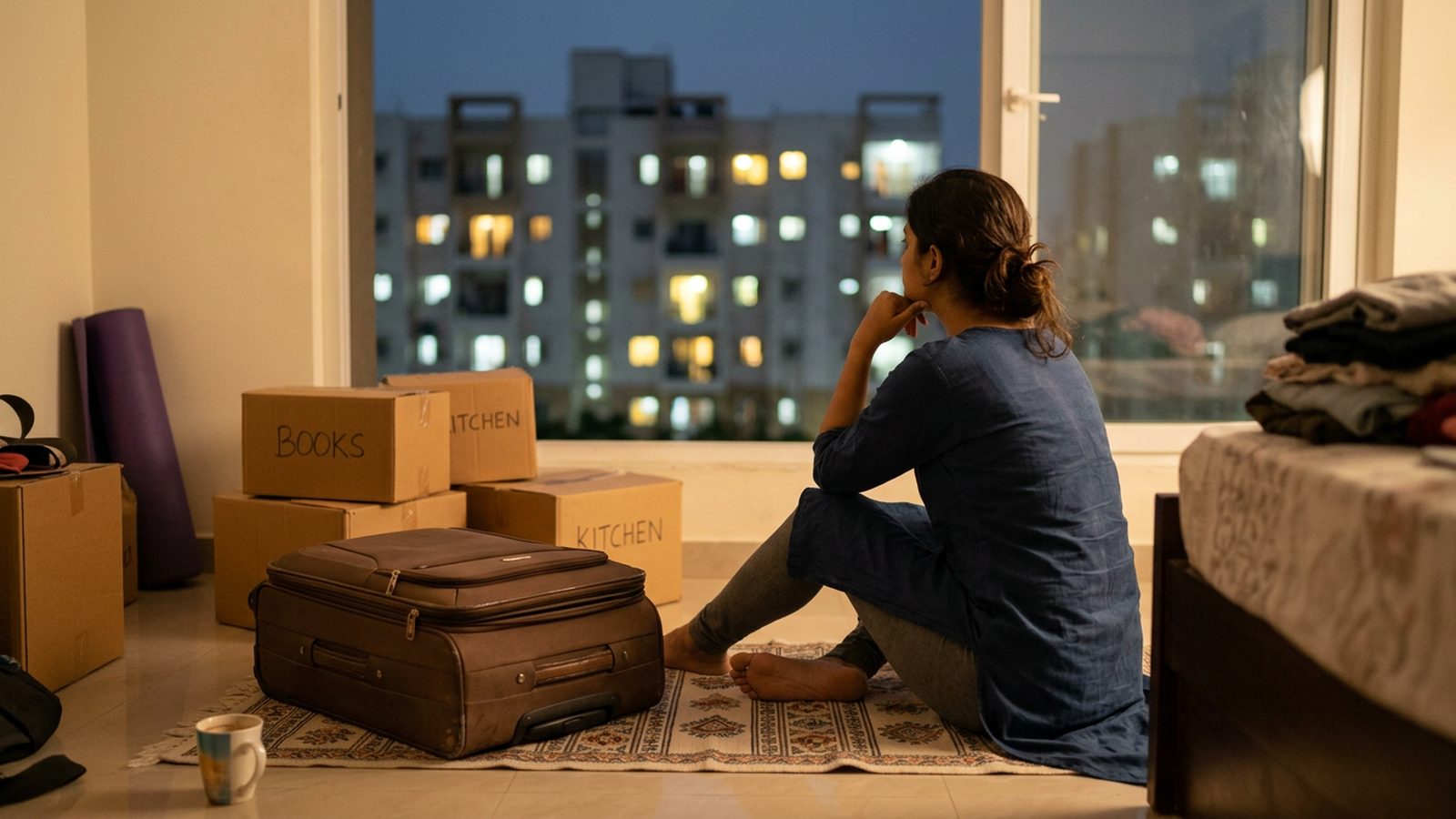
Why the first weeks feel the emptiest
When you move, you lose proximity to people and the daily structure that made relationships effortless: the friend you ran into at the building gate, the colleague who sat next to you for years, the shop owner who knew your order. None of that exists yet in the new city, and building it from zero takes real effort, even though "just make friends" sounds simple. You don't know anyone, and you don't yet have a routine that puts you around the same people repeatedly, which is what most friendships are actually built on.
The emptiness is sharper, too, because moves for a job or a course come with pressure to perform well immediately, leaving little bandwidth to also build a social life. You end up with new deadlines and zero comfort zone at the same time, which is tiring even before you name it as loneliness. If there's genuinely nobody to call in the new city on a hard evening, that gap is its own problem worth addressing directly, and I have no one to talk to right now, what do I do? covers what to do in that specific moment.
You're also not an outlier here. The World Health Organization's 2025 report on social connection estimates that about 1 in 6 people worldwide experience loneliness at any given time. Relocation is one of the most common triggers for it, not a rare personal failure.
What actually speeds this up
- Pick two or three routine spaces, not one-off events. A gym, a class, a regular café, or a co-working space works better than a single party, because you see the same faces repeatedly, which is what actually builds familiarity.
- Say yes to the first few invitations, even mediocre ones. The first coffee or group outing in a new city is rarely great, but it often leads to the second one that is. Treat early invitations as the cost of entry, not a verdict on the city.
- Keep two or three people from home in regular contact, not everyone. Spreading yourself thin trying to stay equally close to your whole old circle leaves less energy for building something new. Pick a few and let the rest stay warm but less frequent.
- Give yourself a real checkpoint before judging the move. Decide you'll properly assess how you feel once you've actually had some settled weeks of routine behind you, not in the first few days, when almost nothing has had time to form yet.
- Track small wins, not big ones. A person who waves at you at the gym, a colleague who asks you to lunch, a neighbour who knows your name, these are the real markers of progress, not having a full friend group right away.
If the move also lines up with a festival season away from your family for the first time, that adds its own weight on top of everything else. This piece on spending Diwali away from home has specific ways to get through that without it feeling worse than it needs to.
When to talk to someone
If the loneliness is heaviest in the early weeks and you can see it easing bit by bit as you try the steps above, that's a normal adjustment. Talking to a friend back home, or a colleague who's been through a similar move, can also help you feel less alone in the process. Clarity's loneliness topic page has more on this specific kind of loneliness and what tends to help.
If there's been no real change despite consistent effort, if you're avoiding the few opportunities you do get to meet people, or if the loneliness sits alongside low motivation, poor sleep, or a sense of dread about daily life, it's worth speaking to a counsellor. A move is a real disruption, and persistent distress after one deserves support, not just more time.
If it's 11 pm in an unfamiliar flat and there's genuinely no one nearby to call, the Clarity app gives you a real, trained listener over chat or call right now, someone who doesn't need the backstory of your whole life to be useful in that moment. If the low feeling is more constant than situational, Clarity's counsellors are there for that too, over chat, call, or video, privately and without judgement.