

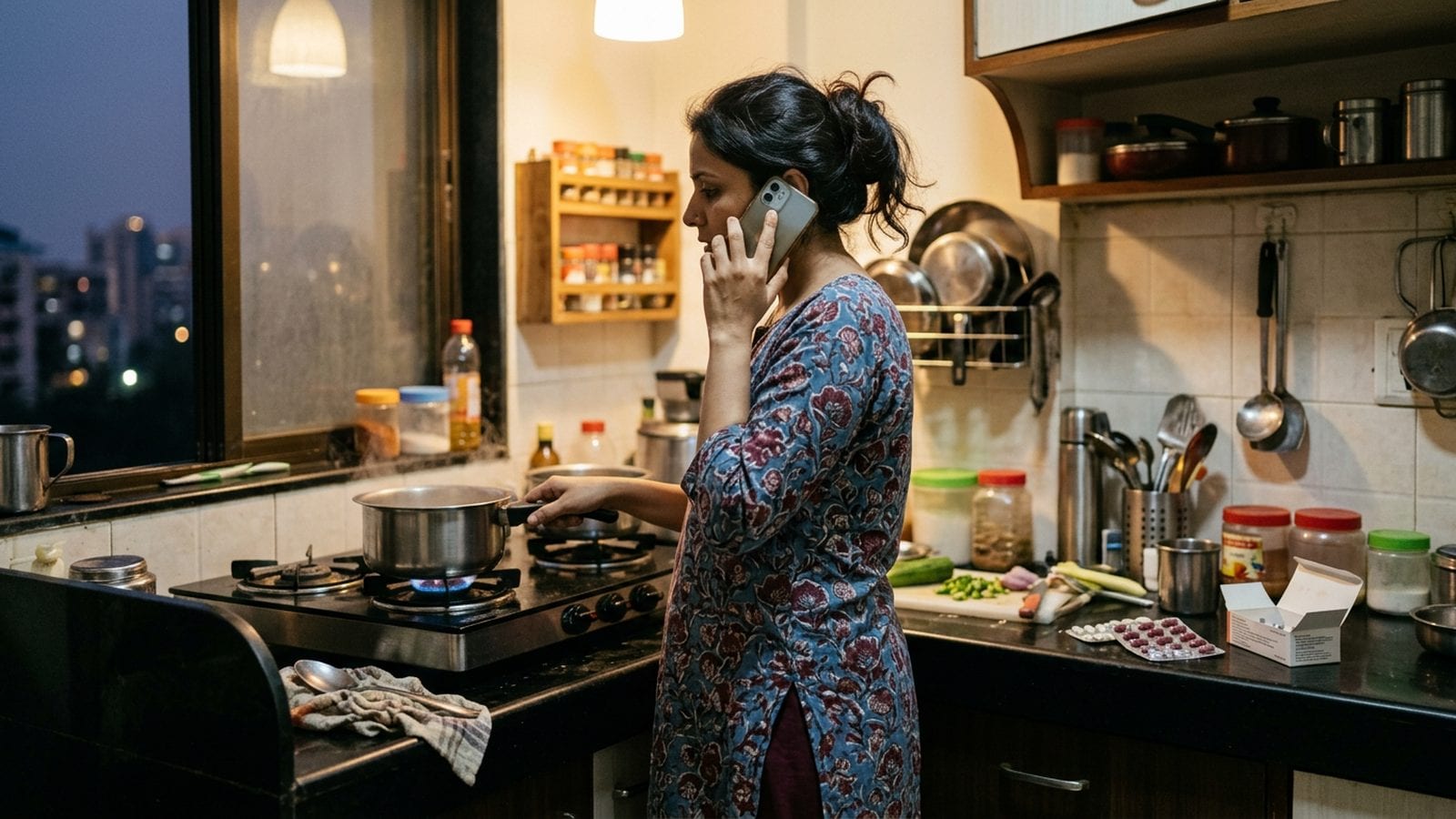
The sandwich generation refers to adults, usually in their 30s and 40s, caught between the care needs of aging parents and the demands of their own job, spouse or children, often as the sole or primary earner in the household.
Why this is especially hard in India right now
India's elderly population is projected to double to over 20% of the total population by 2050, up from about a tenth today, according to the UNFPA India Ageing Report. More families than ever are managing this at home, often with one adult child carrying most of it, especially if they are the sole breadwinner or the one living closest to their parents. Formal elder care and paid help are still uncommon outside big cities, so the caregiving, the coordination with doctors, the financial support, and the emotional labour of it, usually falls on one person by default rather than by family decision.
Where the guilt actually comes from
The guilt rarely comes from doing too little. It usually comes from an impossible comparison: when you're at work, you feel you should be with your parent. When you're with your parent, you feel behind at work or absent from your own kids or spouse. This isn't a sign of a personal flaw. It's what happens when one person is asked to be fully present in two or three places at once.
Exhaustion compounds this. Tired people feel more, not less, and that often reads internally as "I'm failing," when it is closer to "I am depleted." The tiredness itself is information, not just an obstacle to push through.
What actually helps
- Separate the guilt from the facts. Write down, honestly, what you actually did this week for your parent. Guilt distorts how much you think you've done; a plain list corrects it.
- Name the imbalance to siblings or other family, specifically. Instead of "I need help," ask for one defined task, a weekly call, a hospital visit, a shared expense. Specific asks get answered more often than general ones.
- Build in one recovery point in your week that is non-negotiable. Even thirty minutes, protected and repeated, does more for burnout than one long break taken rarely.
- Get practical help where you can afford it, a part-time attendant, grocery delivery, a nurse visit for routine checks. This is not outsourcing love, it is making room for the parts of care only you can give.
- Say the hard sentence out loud to someone, "I am exhausted and I feel guilty about it," even once. Many caregivers carry this silently for years because they assume no one else will understand it.
This pattern overlaps with what shows up in households where families are in constant low-grade conflict; caregiving strain often fuels exactly those arguments, especially over who is "doing enough." It also looks a lot like burnout that shows up at work, even though the cause here is at home, not the office; the exhaustion and the guilt behave the same way.
When to talk to someone
If the guilt and tiredness have become constant rather than occasional, that's a good signal to talk to someone, a friend who won't minimise it, a listener who has no stake in your family's dynamics, or a counsellor if it's affecting your sleep, your work or your marriage over time.
If it's 11pm and you've just finished a call with your parent's doctor and still have to be functional at work tomorrow, the Clarity app has real listeners available right now over chat or call, people you can talk to privately without having to explain your whole family history first. If the guilt and exhaustion have been building for months, a Clarity counsellor can help you work through the pattern itself, not just the latest crisis. You can also look at Clarity's anxiety and stress resources for more on managing the kind of ongoing, low-grade strain caregiving creates. Persistent exhaustion and guilt that don't lift are worth professional attention, not something to just wait out.