

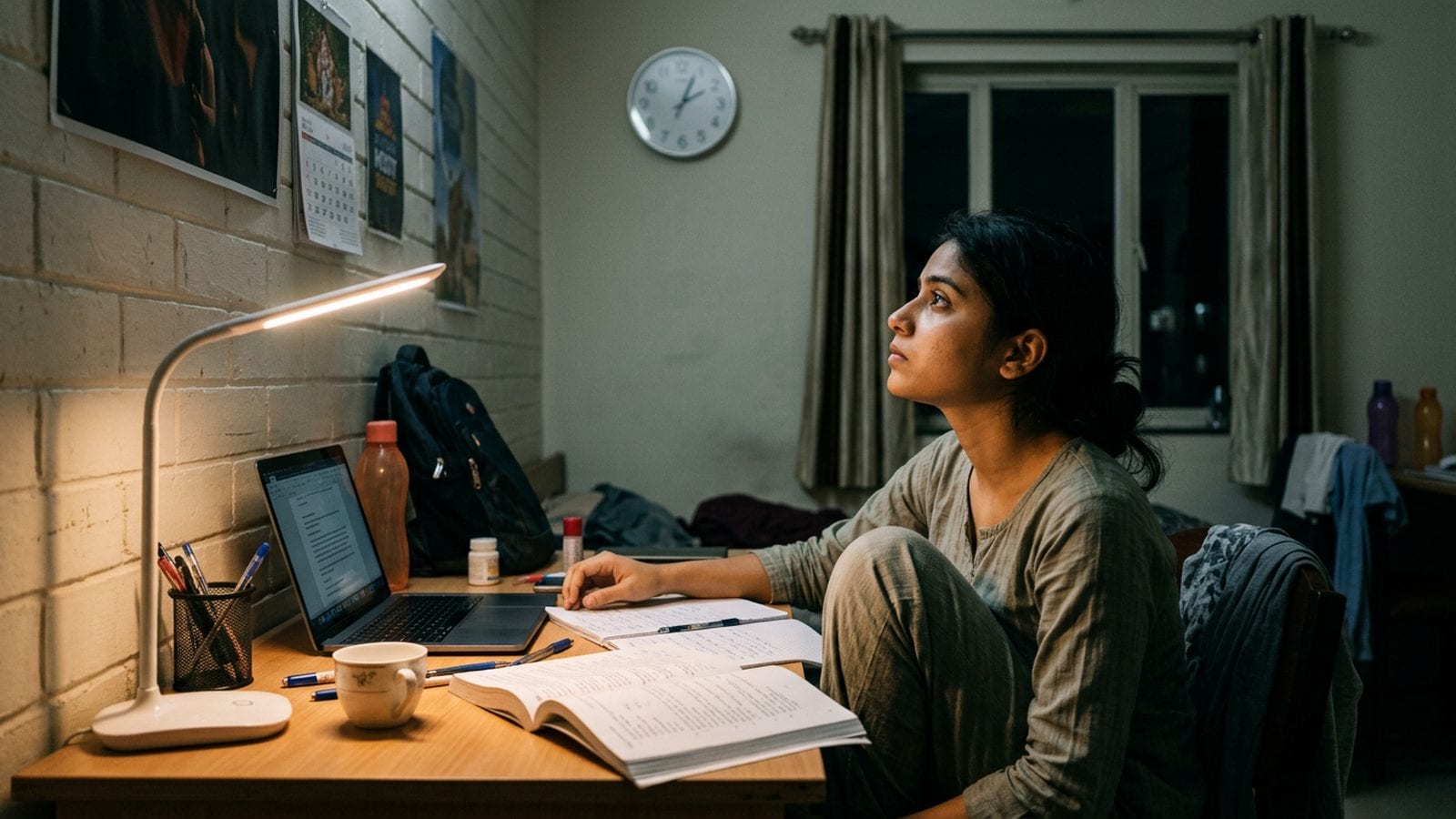
What exam anxiety actually is
Exam anxiety is your body's stress response switching on before a test that matters to you: a racing heart, a tight chest, a stomach that won't settle, and a mind that keeps jumping to the worst possible score. It is not proof that you haven't worked hard enough. It shows up in toppers and strugglers alike, and it is usually worse in the days right before the exam than during it, because that is when your brain has the most time to imagine what could go wrong.
If this feels bigger than it should, you are not imagining it — exam weeks do this to a lot of people you would never guess about. Exam-season anxiety that doesn't settle once the exam is over deserves the same attention as any other kind.
What helps right now
- Write down the actual numbers. Open your syllabus and mark exactly what is left — chapters, practice sets, revision rounds. A vague "so much is pending" feeling is scarier than a real list, because a list has an end.
- Study in blocks, not marathons. Pick one topic, set a 45-50 minute timer, and stop when it rings. Long unplanned sessions make you feel busy without making you feel ready, which is its own kind of exhausting.
- Protect your sleep the night before. Cramming after 11 pm rarely adds marks, and the lost sleep makes recall and focus worse the next day. If you cannot fall asleep because your mind keeps looping, this piece on what to do the night before an interview covers the same late-night spiral and works just as well before an exam.
- Use your breath to bring your body down. Breathe in for four counts, hold for four, out for six, for about two minutes. It will not teach you the syllabus, but it lowers the physical panic enough to let you actually read the question paper.
- Say it out loud to one person. Tell a friend, a sibling, or a listener "I'm really anxious about this exam" before you try to push through alone. Naming the feeling out loud tends to shrink it faster than replaying it silently in your head ever does.
When to talk to someone
A friend who is also appearing for exams can be useful for comparing notes, but they are often anxious too, which can make your worry louder instead of quieter. A listener who isn't personally invested in your result can be steadier to talk to when you just need the panic to come down before you go back to studying. If the anxiety doesn't ease once the exam is over, keeps you from sleeping or eating properly for days, or feels bigger than this one exam, that is worth raising with a counsellor rather than waiting it out — and if you ever feel like you cannot cope at all, please tell someone you trust right away.
If it's 11 pm and your mind won't stop running through worst-case scores, a listener on the Clarity app is a real, trained person you can talk to right then over chat or call, privately, without having to explain your whole academic history first. If the anxiety has been building for weeks and shows no sign of easing, a Clarity counsellor is there for that longer conversation. You can also read more on how anxiety shows up and what helps, including what restless, anxious feelings without a clear trigger are about.
Exams end. The habit of catching your anxiety early and talking about it instead of sitting with it alone is the part worth keeping well after this particular exam is over.